For the second time, Youth RISE participated in the 35th session of the Commission on Crime Prevention and Criminal Justice (CCPCJ) that took place in Vienna, from 1st to 5th June. There, we participated in key informal dialogues with the heads of the UN Office on Drugs and Crime (UNODC) and the CCPCJ, while also presenting in a side-event alongside other civil society organisations and UN officials.
Informal Civil Society Dialogues
At the Commission, we asked the Executive Director of the UNODC:
The UN Convention on the Rights of the Child highlights that children should be protected from the harms of illicit drugs and organised criminal networks, but also ensure their right to health, education, and non-discrimination. What mechanisms does the CCPCJ use to ensure that punitive drug enforcement approaches don’t inadvertently violate these other child rights, particularly for children from marginalized communities?
We also questioned the Chair of the CCPCJ:
How does the CCPCJ support the monitoring of harms that occur within juvenile criminal justice systems, including harms stemming from mandatory drug treatment responses, and violence from criminal justice staff. When such harms are detected, how does the CCPCJ provide guidance to Member States to address them and ensure their reporting?
The Chair replied that the CCPCJ serves as an agenda setter for the Member States, encouraging them to improve their data collection and reporting mechanisms, including transparency in juvenile justice institutions. With the CCPCJ acting as a platform to exchange best practices and create new standards and norms, they hope the Commission can develop a common understanding on how to deal with juvenile offenders and educate them on a new way forward.
Side event: Global Prison Trends: Progress Made, Challenges Ahead, Trends to Watch
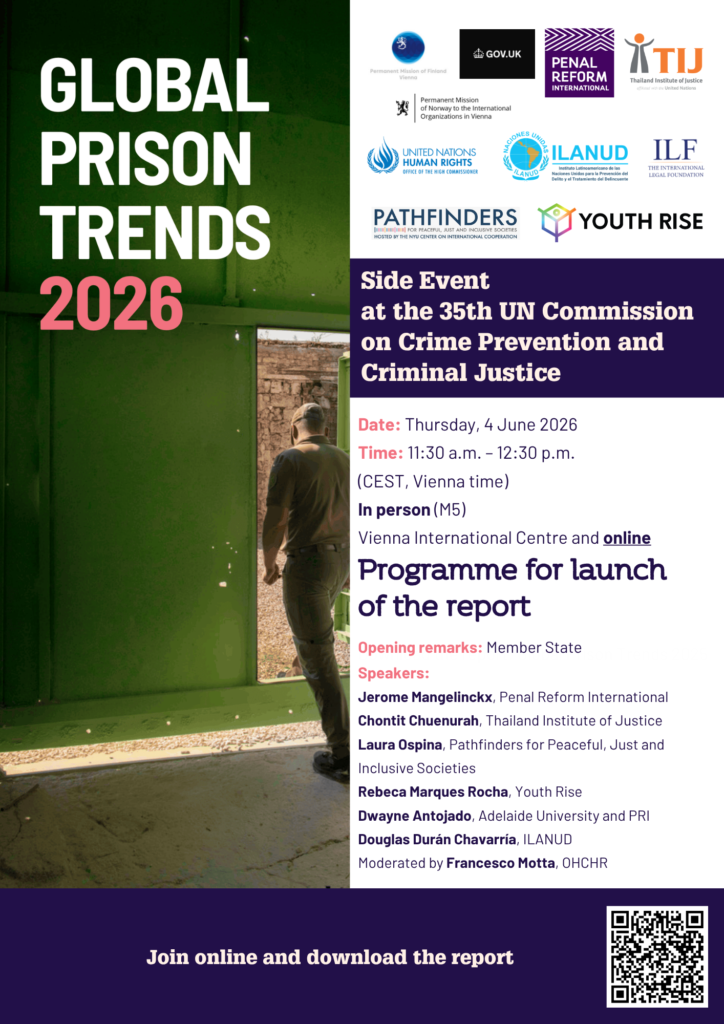
Youth RISE also participated in the side event organised by Penal Reform International (PRI), supporting the launch of their new report on Global Prison Trends on the state of prisons worldwide. The side event was supported by Finland, the Thailand Institute of Justice, the United Nations Latin American Institute for the Prevention of Crime and the Treatment of Offenders, the Office of the United Nations High Commissioner for Human Rights (OHCHR), the International Legal Foundation, and Pathfinders for Peaceful, Just and Inclusive Societies.
Youth RISE’s presentation, entitled: “Children, youth and drug policies: the need for criminal justice reform”, was delivered by Rebeca Marques Rocha (Central European University and Shattuck Center for Human Rights) on behalf of Youth RISE. It demonstrated that policies designed to protect young people are, in many cases, causing them direct and indirect harm.
UNICEF data shows 259,000 children are held in detention globally as of 2024, which is likely an undercount given persistent data gaps. In Latin America and the Caribbean, up to 2.3 million children have a parent in prison, with approximately 500,000 of those incarcerations linked to drug offences. Young men aged 15–29 face the highest homicide rates in the Americas, much of it tied to organized crime that thrives under prohibition.
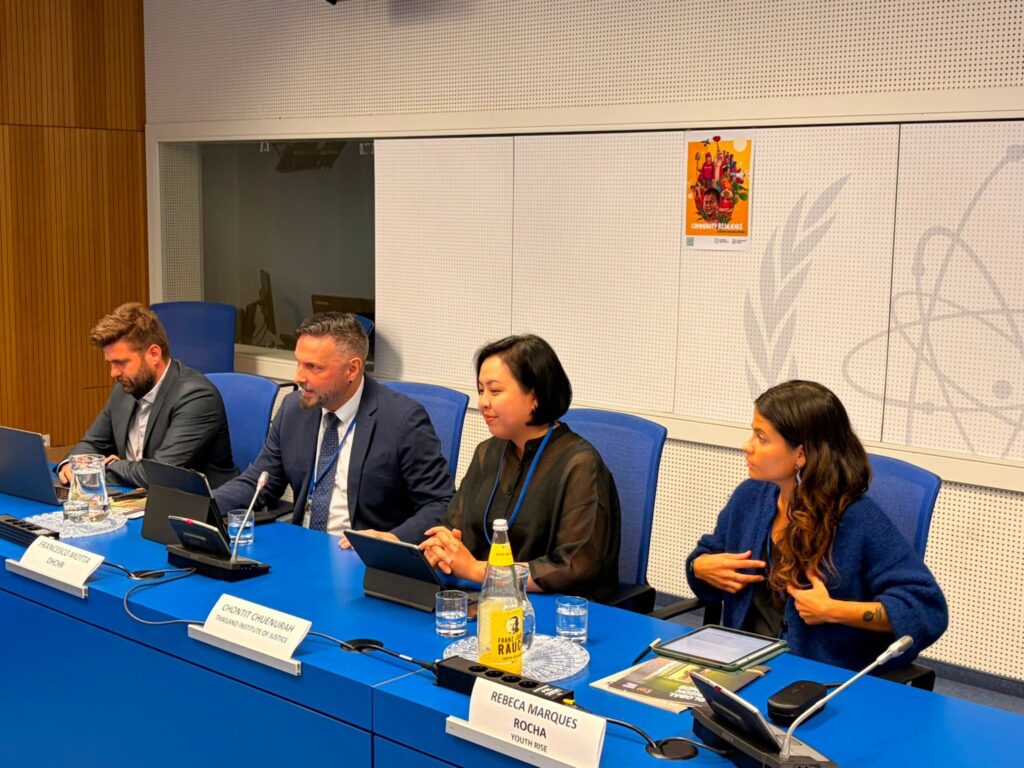
As Rebeca stated in her presentation:
“The Global Prison Trends report by PRI shows us that wherever children are deprived of liberty, it is the most marginalised — by race, ethnicity and poverty — who are most over-represented… The criminal justice system sees these minors as either victims or perpetrators. But the reality is never that clear… We need to remember that these children are first and foremost victims of exploitation. Treating them only as perpetrators ignores how they got there.”
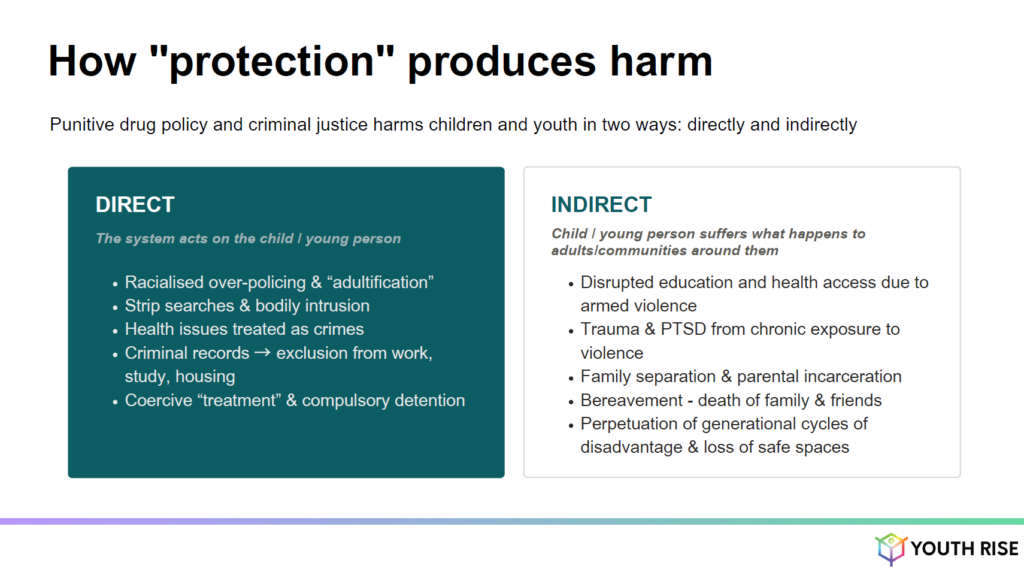
Criminalization of drugs harms children both directly through racialized over-policing, invasive searches, health issues treated as crimes, with criminal records preventing people’s access to work, study, and housing. Indirectly, children often suffer from disrupted education, chronic trauma, family separation, and bereavement that drug-related violence and incarceration inflict on communities.
A participant in a youth consultation conducted last year as part of a project led by the Global Commission on Drug Policy (GCDP) in collaboration with Youth RISE and the Global Campus on Human Rights, described it plainly:
“When a parent is jailed for a small amount of marijuana… childhood is interrupted. It is a generational cycle: one relative is imprisoned or killed, the next enters the [illicit] market and is also killed, then the younger siblings, some under 12, know they are next in line.”
— Participant, Latin America & Caribbean youth consultation – GCDP / Youth RISE
The result of this consultation, in the form of a policy brief, will be published later this summer.
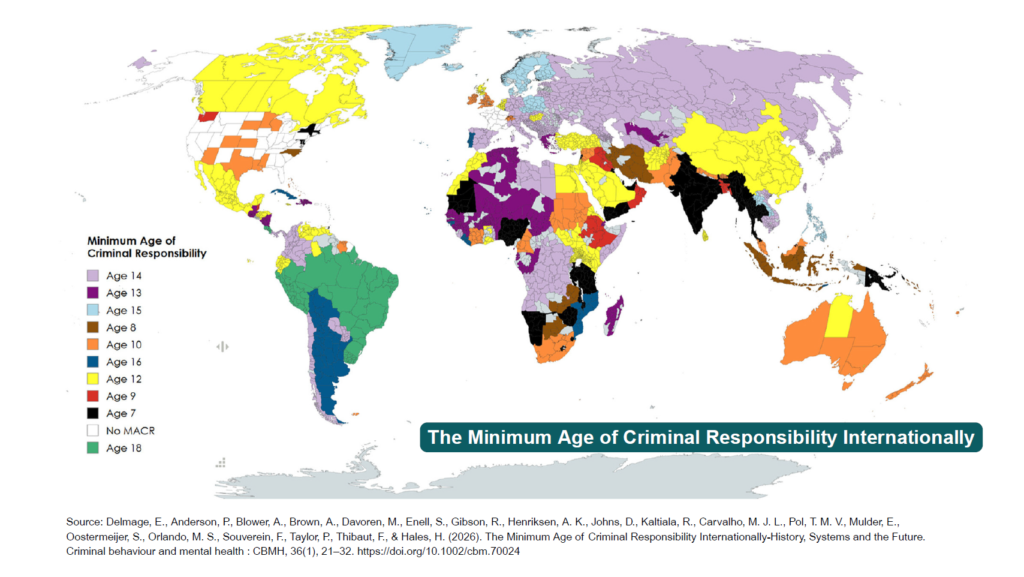
The presentation further noted that the Minimum Age of Criminal Responsibility varies globally from as low as 7 to 18, with many countries having no threshold at all, leaving millions of children exposed to criminal prosecution, especially around drugs.
Youth RISE called on governments and policymakers to act on four principles, based on the 2025 Global Declaration on Advancing Child-Centred Justice:
- Prevent: Decriminalize drug use and address root causes through community support;
- Divert: Invest in community-based alternatives to detention;
- Count: Disaggregate data by age, ethnicity, and gender;
- Listen: Engage young people with lived experience as experts.
Youth RISE thanks Rebeca for delivering the presentation on our behalf. The recording of the side event can be found here.