Written by João Barbosa
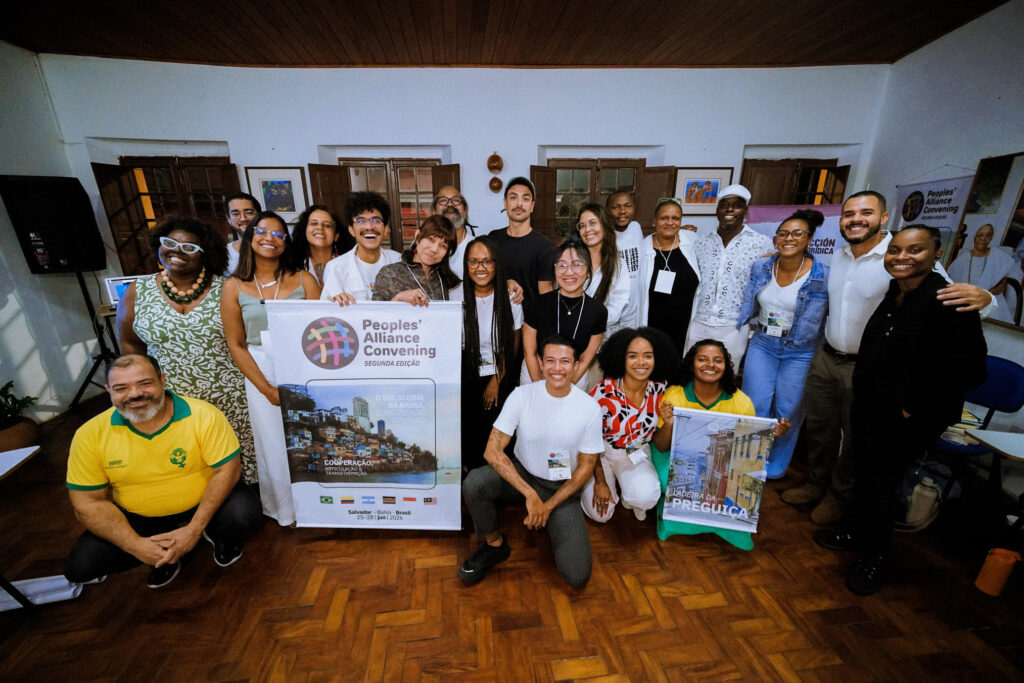
Representing Youth RISE in Brazil, I attended the 2nd People’s Alliance Convening (PAC) in June, held in the historic city of Salvador, Bahia. The PAC is an informal dialogue forum among Global South organizations working on international drug policy advocacy. The convening brought together member organizations and partners from Brazil, Colombia, Kenya, Malaysia, Argentina, and Indonesia to strengthen collaboration on drug policy and human rights.
During this meeting, participants discussed the Alliance’s current priorities, shared perspectives on the drug policy landscape in their respective countries and regions, and co-created a collective advocacy strategy from a Global South perspective. Throughout the convening, the focus remained on ending the war on drugs and addressing its harmful impacts on communities, public health, and the environment.
The event was hosted by Iniciativa Negra Por Uma Nova Política Sobre Drogas, a Salvador-based organization working to transform drug policy through the lenses of racial justice and human rights. The convening was co-organized with Ilex Acción Jurídica, a Colombian legal advocacy organization that advances racial justice and protects the rights of Afro-descendant communities through strategic litigation, policy advocacy, and legal research.
Bringing Global South perspectives together
For context, the first People’s Alliance Convening took place in Bogotá, Colombia, in 2023, when organizations from the Global South formally launched the project and began building relationships while sharing their experiences and perspectives on drug policy through a South-South lens.
This time, in Salvador, we gathered with Brazilian organizations, including the host Iniciativa Negra, Instituto de Defesa da População Negra (IDPN), and Instituto Fogo Cruzado. International participants included Youth RISE, the International Coalition on Drug Policy Reform and Environmental Justice, Hayat (from Malaysia), Suara Perempuan (from Indonesia), Kuza Trust (from Kenya), and Ilex Acción Jurídica (from Colombia).
Over two days, we revisited and updated the regional assessment developed during the 2023 convening, reflecting on the current political and drug policy landscape across each participants’ countries. We explored how prohibition intersects with issues such as race, gender, incarceration, environmental justice, and other structural inequalities that are crossed by drug policy, especially in countries such as Brazil and Colombia.
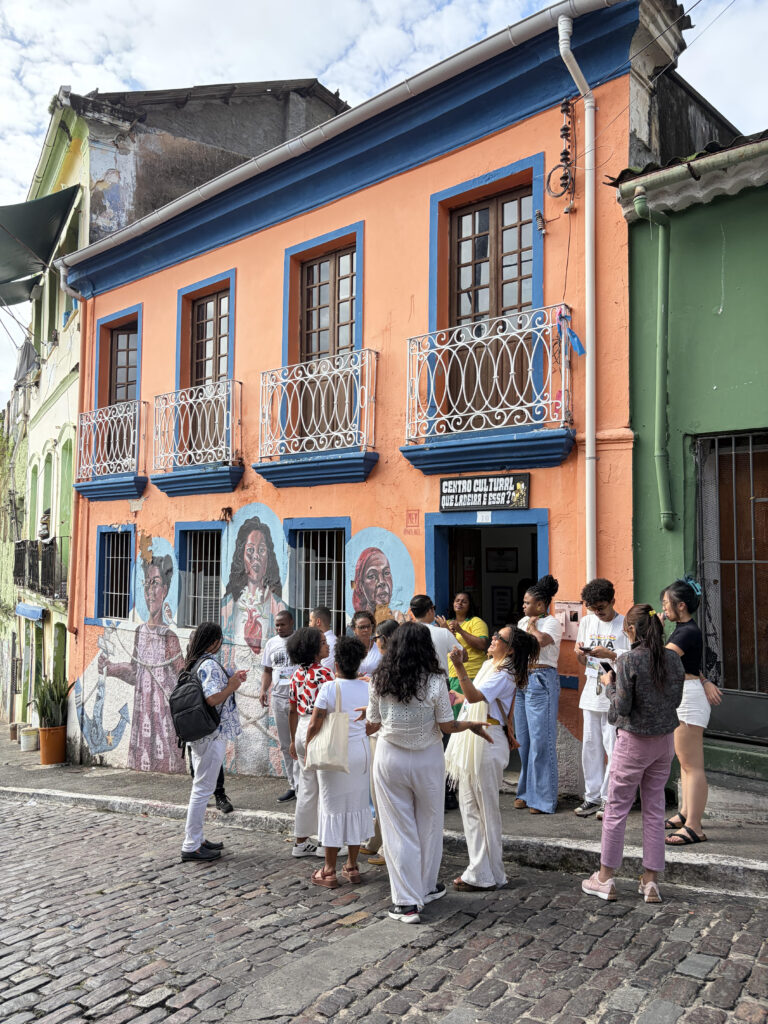
The convening took place at the symbolic Centro Cultural Que Ladeira é Essa?, located in Ladeira da Preguiça neighbourhood in Salvador’s historic center. Housed in a centuries-old building, the community space is a symbol of local resistance in an area dealing with mounting gentrification and real estate speculation. As explained by one of the cultural center’s coordinators, the space serves as a hub for community organizing, offering workshops, cultural activities, and educational initiatives while supporting local residents in defending their right to remain in the neighborhood.
Despite this history of resistance, Salvador is one of the most violent state capitals in Brazil, disproportionately driven by the drug war and overwhelmingly impacting Black and low-income communities, such as the ones living and working in the Ladeira da Preguiça.
The importance of international solidarity
We couldn’t talk about resistance and South-South collaboration without mentioning international solidarity. This was a recurring theme throughout the discussions and became central to participants’ understanding of what it means to build an international alliance around shared historical and structural challenges rooted in colonialism and reflected today in mass incarceration, drug prohibition, racism, economic exploitation, environmental destruction, and poverty. It also reinforced the understanding that the war on drugs is not primarily about substances, but rather about systems of control, political and economic power. Rather than working in isolation, participants emphasized the importance of building collective advocacy that reflects the experiences of the communities most affected by punitive drug policies.
As policy reform, and politics more broadly, requires political imagination, discussions also explored what alternative approaches to public safety might look like. Participants asked whether it is possible to move away from punitive policing altogether and how societies can replace punishment with approaches centered on care, healing, and community well-being.
These questions also informed an exercise on narrative building that I facilitated, in which participants collectively identified the Alliance’s key priorities for future advocacy and communications. They reflected on questions such as: What myths about drugs are we trying to challenge? How should drug use be framed? How can we move beyond simplistic counter-narratives? What role should the Global North play? And how can we respond to dominant narratives without reinforcing them?
As the activity’s facilitator, I drew on my experience in youth advocacy and prison reform to highlight the intersections between the so-called war on drugs and youth incarceration, particularly in Latin America. I emphasized how punitive drug policies disproportionately affect young and racialized people, reinforcing cycles of criminalization and imprisonment from an early age.
Lastly, as the Alliance’s second in-person convening, it was an opportunity to reflect on how we can move forward as a movement of organizations from different countries that, despite their distinct contexts, share many common challenges and priorities.
Looking ahead, we will soon release a manifesto outlining our priorities and next steps for collective action, which we will add here once it’s out. Stay tuned!