Written by Paula Daniela Jaimes Rico, Maria Camila Bayona Villamil, Estefany Katterin Moreno Cuspian
In Colombia, the recreational consumption of cannabis for adults was about to become law. It was the first time in history that we were so close to regulation. However, it is still a topic that generates a lot of rejection thanks to the historical stigma and criminalization that have been especially strong for being a producing country. The draft Legislative Act No. 002 of 2022 House – 033 of 2022 Senate involves amending Article 49 of the Constitution, which requires eight debates to be approved. The article states, “The carrying and consumption of unregulated psychoactive substances is prohibited, except for medical and scientific purposes”.
These two lines of business sustained the systematic violations of the human rights of a large number of people linked to the production, use and consumption of different illegalized substances, which, paradoxically, were one of the largest sources of capital for the country. This profitable business generated a lot of violence throughout the national territory because while the media and institutions increased the stigma, prohibition made the productive and distributive processes much more profitable but violent. The State was also permeated by drug trafficking money, which strengthened through institutionalism the dispossession and death in a country that already had an internal armed conflict, which was strengthened by drug trafficking.
Today we are still living through an intensification of the war, where we have seen a great number of public resources invested in aerial spraying of glyphosate that contaminates and poisons, forced eradication, assassination of leaders, displacement, extrajudicial killings and human rights violations. Despite this historic and failed war on drugs, today, an opportunity has opened up for the regulation of recreational cannabis for adult use, thanks to an electoral shift to the left in the presidency and Congress never before seen in Colombia, for the first time a president also refers specifically to the war on drugs as a global problem that directly affects racialized and impoverished minorities, in addition to the environmental impact that it entails, as we could see in various interviews and in the speech at the UN, he refers to the persecution of cannabis as part of the failure of this war and that has gradually strengthened the illegal groups; In addition to an important discursive twist, which is to contextualize consumption, not to blame consumers from the classic prohibitionist perspective, but to observe them as people immersed in socio-political and economic contexts that affect mental health and opportunities for consumers.
This is why the congressional decision is of great importance for the future of peace in Colombia, the achievement of justice and the guarantee of rights, not only for consumers but also for the large population of the country related to this phenomenon. Above all, it will be a starting point for a conversation that must also take place at the regional and global level on the environment, violence and a fair market for all.
It is necessary to guarantee a fair market for the most affected communities and de-stigmatization informative campaigns from a risk reduction perspective in order to build strategies that will lead Colombia to lead the change in the global discourse on drug policy.
Cannabis users are not homogeneous, the diversity of cultures, races, social strata, academic backgrounds, etc., added to the ease of access and the culture of self-cultivation, has made the cannabis community grow steadily. In spite of this, the criminalization of those who consume has left many people imprisoned and murdered, especially the most vulnerable. The human rights of those who use cannabis have been systematically violated through prohibitionist strategies exercised by bodies such as the police, the army and the public prosecutor’s office.. It is also necessary to propose forms of reparation and justice for the communities historically affected, putting these actors at the center of the discussion and listening to their expectations and needs.
This is also an opportunity to talk about conscious consumption, education with a focus on harm reduction and the political scope of cannabis consumption. We must think of a careful and sensitive public policy, focused on risk reduction and based on evidence, that informs and provides options, taking into account all the actors of the cannabis world. We should also highlight the potential of the plant and our positive experiences as cannabis users, enhancing the spaces of collective construction that exist and are strengthened, facing a double standard derived from deep religious roots of Judeo-Christian morality. A policy that manages to bring together users and bring about a change in the cultural paradigm of consumption that contributes to mental health and the construction of realities that build the value of life.
How was the debate experienced?
The debate for the regularization of cannabis for adult use in Colombia collapsed after having been postponed twice in Congress – it failed to achieve the absolute majority. It was the first time that this discussion reached so far in political procedures in Colombia. One could feel the airs of change and the hope to achieve a fair drug policy. However, we could not celebrate such a long-awaited event. This project sought to reform an article of the political constitution, so it was necessary for it to go through 8 debates in Congress. It was also aimed mainly at production and commercialization, which could open a large market for the country and become a good source of tax collection, as well as allow the creation of sensitive public policies that respond to the needs of the population.
In Colombia, the possession of cannabis has been decriminalized since 1869 and consumption was decriminalized in 1994. However, this has not prevented ambiguities and abuses by the State and the police, affecting all actors in the cannabis world, in addition to sustaining criminal structures and illicit economies in a country that already had a strong-armed conflict, thus radicalizing internal violence, corruption and the stigmatization of the plant and those who use it. This is why this discussion not only touches the people directly involved in cannabis but the entire national population, which is being hit by the consequences of a failed war on drugs in a drug-producing country.
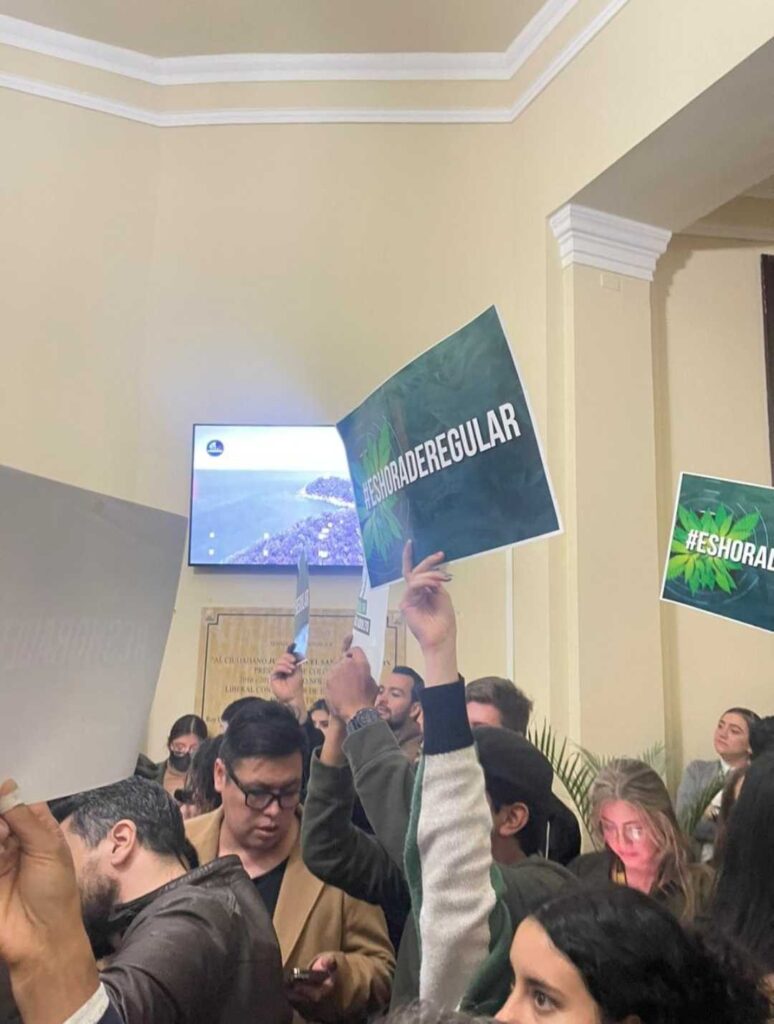
Thus, in seeking to regulate the sale of cannabis, the main arguments for and against were generated. Those who continue to defend the war on drugs use the stigma, disinformation and the creation of social fear were used to persuade, using strategies such as the constant appeal to the safety of children, talking about cannabis as a gateway drug, and consumption as an addiction, and that consumption would be promoted among young people. Those in favor spoke of the contradiction of prohibiting the sale of a substance that is legal to carry and consume, of the negative effects it has in terms of violence, of the economic and fiscal potential for the country and of the senselessness of prohibition if what is wanted is the safety of children and young people.
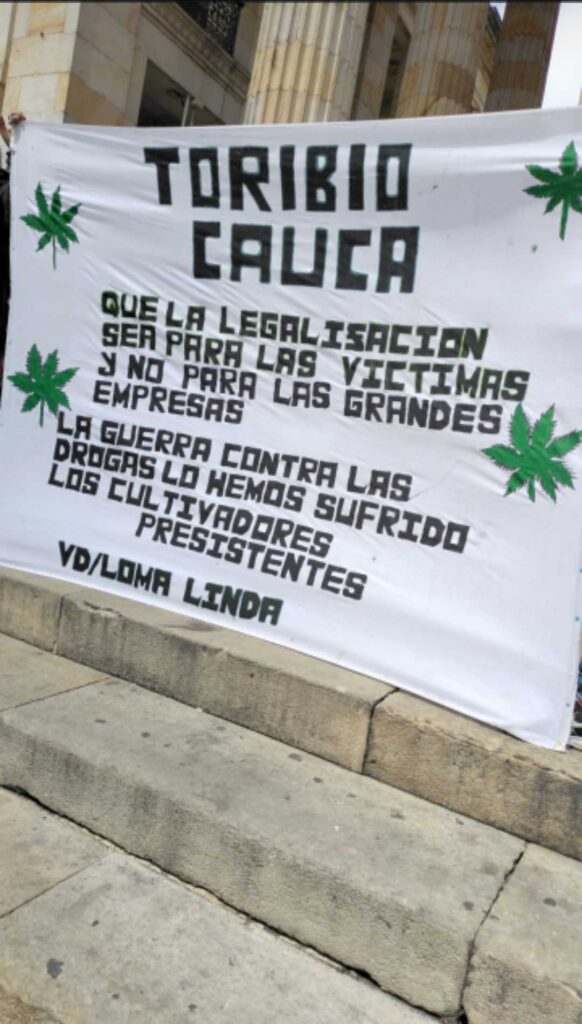
We cannot leave aside the pronouncement of the indigenous peasant communities that grow cannabis for recreational use in the north of the Cauca, who called for liberation rather than regulation and made some observations on the impacts that could have on the communities that have historically planted and have been direct victims of the war on drugs, emphasizing the need for a cannabis economy with a social sense, a self-regulated liberation by the pre-existing communities, where justice and the inclusion of the different sectors involved is guaranteed, with the State being one more actor and avoiding dispossession by industrial entrepreneurs who wish to appropriate the great economic potential of the plant.
To tell the truth, the failure of the reform was more a matter of politics and contingencies, both in terms of the possibility of attendance of some congressmen who supported the project, as well as the proximity of regional elections, so there is confidence in the future, since this is a change that is being experienced globally, and that Colombia, as the epicenter and main victim of prohibitionist approaches, must join in. This event served to put the debate in public opinion, to add alliances, and to create more enthusiasm for the mobilization of all cannabis actors. Above all, it served to create collective reflections on how a public policy focused on people should be, stressing public health and risk reduction. A legal cannabis market should take into account the historically affected communities and avoid succumbing to the interests of multinational corporate businesses. It’s about time to redefine our future!